Motorcycle Warranty Coverage Explained for 2026

Table of Contents
- What a Proper Annual Motorcycle Service Includes
- Your Motorcycle Service Checklist: Know What’s Being Done
- Average Cost of Motorcycle Service: What’s Fair to Pay
- How to Spot Unnecessary Motorcycle Repairs Before You Agree
- Questions to Ask Your Mechanic Before Handing Over the Keys
- Motorcycle Maintenance Schedule by Mileage: Don’t Get Caught Out
- Red Flags for Overcharging and How to Handle Them
- Conclusion: Service Smart, Ride Confident
- Frequently Asked Questions
Last Updated: September 8, 2026
What a Proper Annual Motorcycle Service Includes
An annual motorcycle service is a scheduled inspection and maintenance routine designed to keep your bike safe, reliable, and within the manufacturer’s specified tolerances. Most riders worry about being overcharged because they don’t know what a fair service actually involves. An informed rider is the best defence against unnecessary work, so this guide breaks down exactly what should happen during a proper annual service.
A genuine annual service goes far beyond an oil change. A competent mechanic should check the brake fluid and pads, inspect the chain and sprockets for wear, and verify the condition of your tyres, including pressure and tread depth. They should also assess the suspension for leaks, check the steering head bearings, and confirm that all lights, indicators and the horn operate correctly. The service should conclude with a road test to ensure the bike handles and performs as it should.
The critical point is that a proper service is systematic. If a mechanic cannot explain what they checked and why, you are entitled to question the depth of the work. A reputable garage will provide a checklist or a detailed invoice listing every item inspected and every part replaced.
Your Motorcycle Service Checklist: Know What’s Being Done
Using a motorcycle service checklist protects you from paying for work that was never carried out. This is the single most effective way to ensure you get a proper annual service without being overcharged by local mechanics.
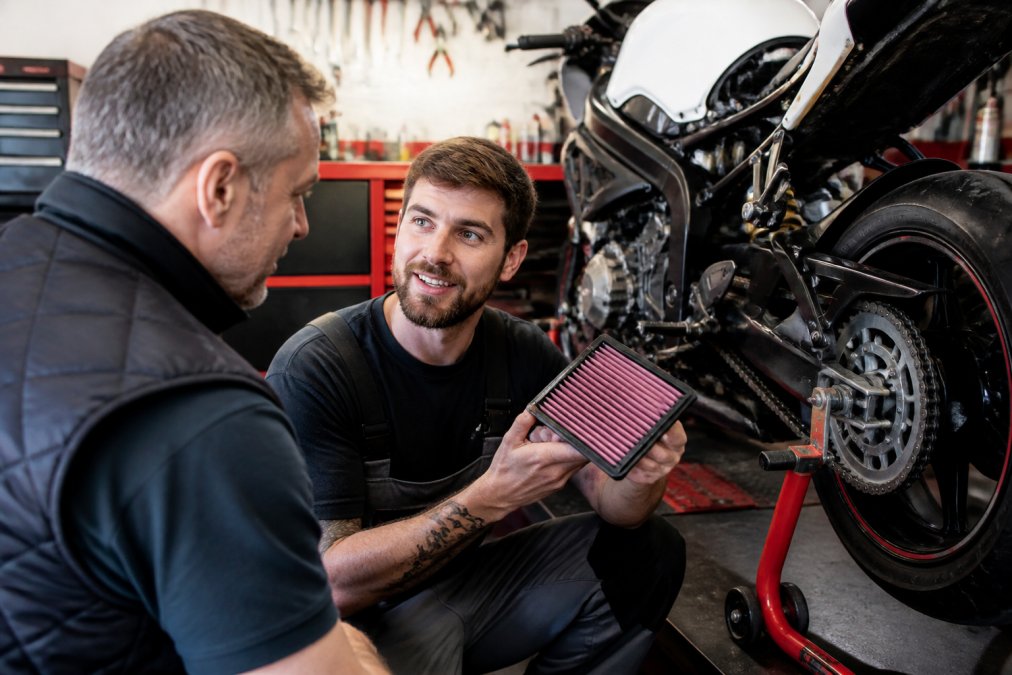
Before you hand over your keys, ask to see the workshop’s standard checklist. A thorough service should cover the following core items:
- Engine oil and filter replacement
- Brake fluid level check and top-up
- Chain tension, lubrication and alignment
- Tyre condition, pressure and tread depth
- Coolant level and condition (for liquid-cooled engines)
- Clutch and throttle cable adjustment
- Battery condition and terminal cleaning
- Suspension and steering head bearing inspection
A common mistake is assuming a “full service” means the same thing at every garage. Service levels vary, so confirm exactly what is included in the quoted price before agreeing to the work. This simple step prevents disputes later and ensures your motorcycle service checklist matches what you actually pay for.
Average Cost of Motorcycle Service: What’s Fair to Pay
The average cost of motorcycle service varies widely depending on the bike’s make, model, and the garage’s location and reputation. Rather than focusing on a single national figure, it is more useful to understand what drives the price so you can judge whether a quote is fair for your specific situation.
Labour is the largest portion of any service bill. A small-capacity commuter will typically take less time than a large adventure bike with fairings that need removing to access components. Parts also add to the cost, and genuine manufacturer parts will always cost more than aftermarket alternatives. Some dealers charge a fixed fee for a standard service, while others bill by the hour, so always ask how the quote is calculated.
The most reliable way to gauge a fair price is to gather two or three quotes from reputable local garages. According to guidance from the UK Government on choosing a garage, comparing written quotes and checking for accreditation can help you avoid unexpected costs. Be wary of any quote that is dramatically lower than the others; it often means the service is less comprehensive.
How to Spot Unnecessary Motorcycle Repairs Before You Agree
Learning how to spot unnecessary motorcycle repairs is the most valuable skill you can develop as an owner. The key is to ask for evidence. A reputable mechanic will show you the worn part and explain why it needs replacing, rather than simply telling you it is “on its way out.”
For example, brake pads have visible wear indicators, and a chain has a specified wear limit that can be measured. If a mechanic recommends replacing a component, ask them to demonstrate the fault while the bike is still in the workshop. A genuine fault is usually visible, audible, or measurable. If the mechanic cannot show you the problem, you have every right to request a second opinion before authorising the work.
A common tactic used by dishonest garages is to recommend work that is “preventive” but not yet necessary. While some preventive maintenance is sensible, such as replacing a chain before it damages the sprockets, you should be given the choice rather than have the work added without consent. Always insist on a written estimate before any repair begins, and confirm that no additional work will be carried out without your approval.
Questions to Ask Your Mechanic Before Handing Over the Keys
Asking the right questions protects you from overcharging and builds a trusting relationship with your mechanic. A straightforward set of questions will clarify what is included in the service and whether any additional repairs are genuinely required.
First, ask for a fixed written quote that lists every item included in the service. Second, ask how the garage handles additional work discovered during the service; the correct answer is that they will call you for approval before proceeding. Third, ask about the parts they intend to use, whether they are genuine manufacturer parts or aftermarket alternatives, and whether this affects your warranty.
You should also ask about the mechanic’s qualifications and whether the garage follows manufacturer service schedules. A garage that is confident in its work will welcome these questions. A transparent workshop will answer these questions directly without hesitation, giving you confidence that you will not be overcharged. A mechanic who becomes defensive when asked for details is a red flag in itself.
Motorcycle Maintenance Schedule by Mileage: Don’t Get Caught Out
Following a motorcycle maintenance schedule by mileage helps you anticipate costs and avoid being surprised by major work during an annual service. Most manufacturers specify service intervals at regular mileage points, typically every 4,000 to 6,000 miles for oil changes and more comprehensive checks at higher mileages.
The table below summarises typical service intervals, but you should always defer to your owner’s manual for the exact schedule for your model.
| Service Interval | Typical Work Included | Frequency |
|---|---|---|
| Minor Service | Oil and filter change. | Every 4,000-6,000 miles |
| Annual Service | All of the above plus Air & Fuel Filter Change and a Full Health Check. | Every 12 months |
| Major Service | All of the above plus Spark Plug Change. | Every 12,000-18,000 miles |
Keeping a log of your service history is essential. If you can prove that your bike has been maintained according to the manufacturer’s schedule, you are less likely to be told that parts are worn beyond their expected life. A well-documented history also strengthens your position if you need to dispute a repair recommendation, and it adds value if you ever decide to sell the bike.
Red Flags for Overcharging and How to Handle Them
Several warning signs indicate that a garage may be trying to overcharge you. Recognising these red flags for overcharging allows you to walk away before any unnecessary work is carried out.
The most obvious red flag is a mechanic who pressures you to approve work immediately, claiming that the bike is unsafe to ride. While some faults genuinely require urgent attention, such as a leaking brake line, most issues can wait for a second opinion. Another warning sign is a quote that is significantly higher than others you have received for the same work, without a clear explanation for the difference.
If you encounter these tactics, your best response is to collect your bike and seek a second opinion elsewhere. You are never obliged to authorise work at the first garage you visit. The Competition and Markets Authority guidance on your consumer rights confirms that you have the right to a clear price before agreeing to a service, and that any work carried out without your consent may not be chargeable. Knowing your rights is the most effective tool against overcharging.
Conclusion: Service Smart, Ride Confident
Ensuring your bike gets a proper annual service without being overcharged comes down to preparation. Know what a service should include, ask the right questions, and never authorise work without evidence. A written quote, a clear checklist, and a mechanic who welcomes your questions are the foundations of a fair service experience.
When you find a garage that operates with transparency, you can relax and enjoy the ride. When you find a garage that operates with transparency, you can relax and enjoy the ride. If you are looking for a service team that stands behind its work, we would be glad to help.
Frequently Asked Questions
What should be included in a standard annual motorcycle service?
A standard annual service typically includes an oil and filter change, brake fluid check and top-up, chain adjustment and lubrication, and a safety inspection of tyres, brakes, suspension, lights and controls. The mechanic should also check coolant levels, throttle operation and steering head bearings. A reputable workshop will provide a service sheet listing everything completed. If the bike is due a major service based on mileage, valve clearances and air filter replacement should also be scheduled. Always ask for a full breakdown of what the service covers before you agree to the work.
How can I tell if a motorcycle mechanic is overcharging me?
Ask for a written estimate before work begins and compare it against the average cost of motorcycle service for your bike’s engine size and type. Question any repair that was not flagged during the initial inspection, especially if it is described as urgent without evidence. A mechanic should show you worn parts and explain why they need replacement rather than just telling you. Independent reviews and recommendations from other riders are also strong indicators of fair pricing. If a quote feels excessive, get a second opinion from another local workshop.
Is it worth getting a full service every year regardless of mileage?
Yes, even for low-mileage bikes. Time affects more than distance: brake fluid absorbs moisture and degrades, tyres age and harden, and rubber seals can dry out. A yearly service catches corrosion, perished hoses and seized callipers that a bike ridden only occasionally can develop. It also keeps your warranty valid if the bike is new. Following a motorcycle maintenance schedule by mileage and time ensures the bike stays safe and reliable, protecting your investment and your safety on the road.
What questions should I ask before leaving my bike for a service?
Ask for a fixed quote or an estimate of the maximum cost, what the service includes, and whether parts are genuine or aftermarket. Enquire about the mechanic’s qualifications and whether the workshop follows manufacturer service schedules. Ask how long the work will take and whether they will call you before carrying out any additional repairs. Clarify what warranty they offer on their workmanship. A transparent workshop will answer these questions directly without hesitation, giving you confidence that you will not be overcharged.